A message arrives: “Are you okay?”
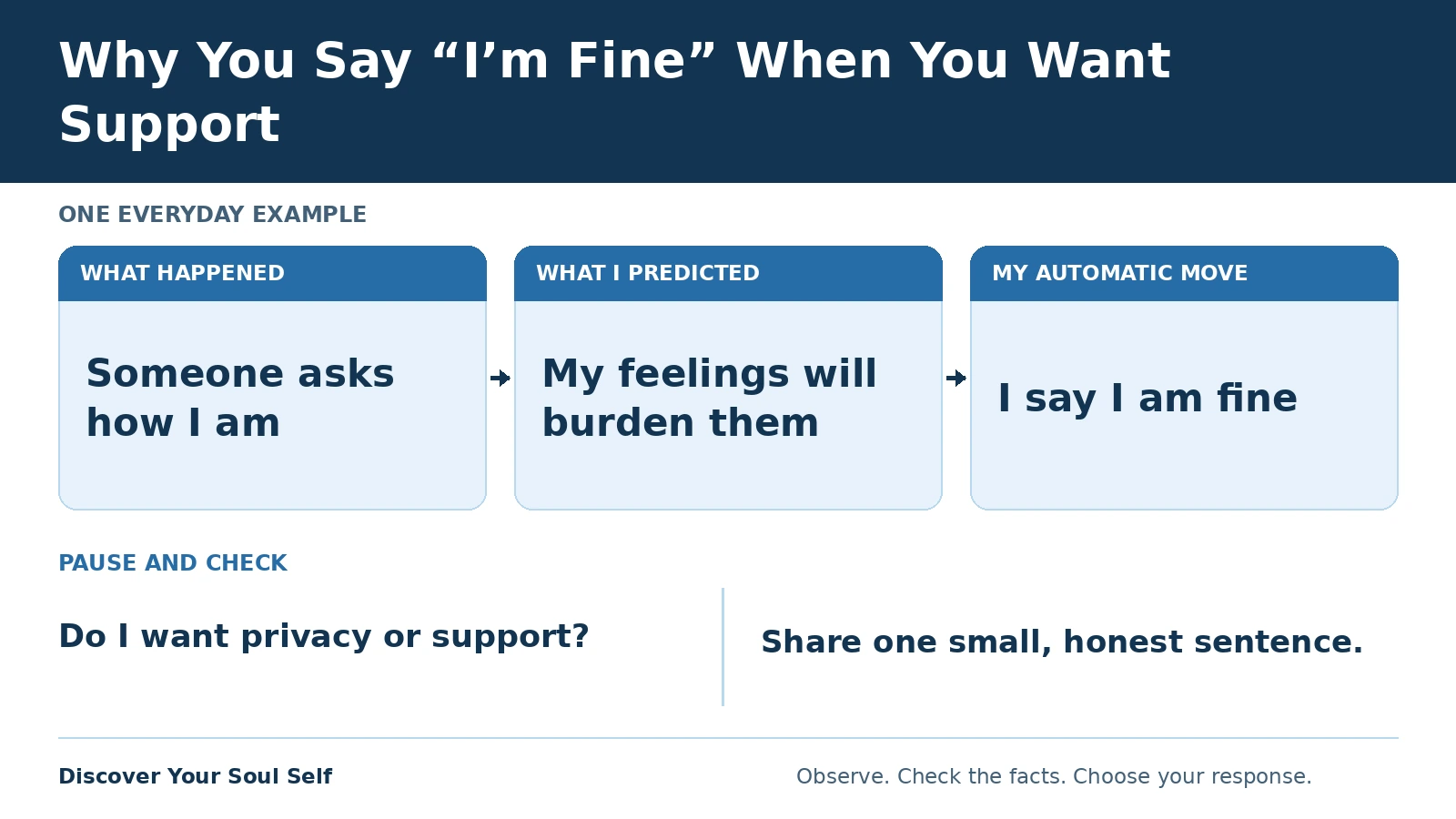
You know you are tired, worried or carrying too much. Still, you type, “I’m fine.”
Sometimes that is a reasonable choice about privacy. Sometimes it is the answer you give before considering whether you want support.
The useful distinction is whether you chose the silence or felt that no other answer was acceptable.
What does an honest answer seem to risk?
You may predict that your feelings will burden the other person, make you seem difficult or change how they see you.
If previous attempts to speak were dismissed, those expectations may be familiar. The present person may respond differently, or they may not. Their actual behaviour matters.
Ask, “What do I think will happen if I say a little more?” That gives you something specific to examine.
Privacy and hiding are not the same thing
You can keep a feeling private because you do not want to discuss it, do not trust this person or need time to understand it. You do not owe every question a full answer.
But you may notice a different pattern: you want to be heard, yet automatically reassure everyone that you need nothing.
Now the answer protects you from a possible reaction while also preventing the support you wanted.
Begin with a smaller truth
You do not have to move from “I’m fine” to your entire history.
Try, “I am having a difficult day, but I am not ready to discuss it.” Or, “I am overwhelmed. Do you have a few minutes to listen?”
You can name what would help: company, practical assistance, a quiet evening or someone listening without giving advice.
A small, clear request gives the other person a way to respond without requiring you to explain everything first.
Choose where the truth goes
Start with someone whose behaviour is generally respectful. Notice whether they listen, respect limits and keep appropriate confidence.
They may not be available at that moment. You can ask about another time or choose another source of support.
If a person uses vulnerability to pressure or humiliate you, you do not need to keep sharing to prove that you can be open.
Notice the urge to take it back
After an honest sentence, you may want to add, “It is nothing,” or, “Forget I said anything.”
Pause. Has the situation changed, or has being heard become uncomfortable?
You can clarify without erasing yourself: “I do not need you to fix it. I wanted to say how things are.”
Let your answer include you
For one ordinary check-in, notice your automatic answer before sending it. Ask whether it matches what you actually want this person to know.
You may keep it brief. You may ask for support. You may choose privacy. The aim is to have those options available.
Self-trust includes your right to speak and your right to choose the pace.
You can be considerate without automatically making your experience disappear from every conversation.

Written by
Mitz
I spent years analysing computer systems. Now I help people recognise the learned rules, predictions and automatic reactions shaping everyday life, so they can build awareness and self-trust.
More about Mitz →