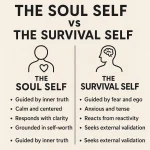
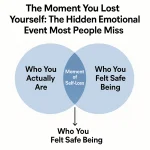
A small comment stays with you all afternoon. You replay it, feel the familiar tension and ask, “What is wrong with me?”
That question can turn a reaction into a judgement about your entire self.
A more useful starting point is, “What happened, what did I think it meant and what did I do next?” Now you have a pattern to examine.
A repeated reaction is not your whole identity
You might call yourself too sensitive, bad at conflict or impossible to please. Those labels describe you broadly while telling you very little about the moment.
“I went quiet when someone questioned me” is more specific. You can ask what felt at stake, what you expected and whether silence helped.
The label closes the enquiry. The description opens it.
Look at what the response was trying to do
Perhaps agreeing reduced conflict. Perhaps checking someone’s mood helped you prepare. Perhaps explaining made it more likely that you would be believed.
Those are possibilities to investigate. Not every reaction comes from childhood or an old threat. Current stress, health, circumstances and the actual behaviour of other people matter too.
You do not need a complete explanation of your past before noticing what the response is doing now.
Map one ordinary example
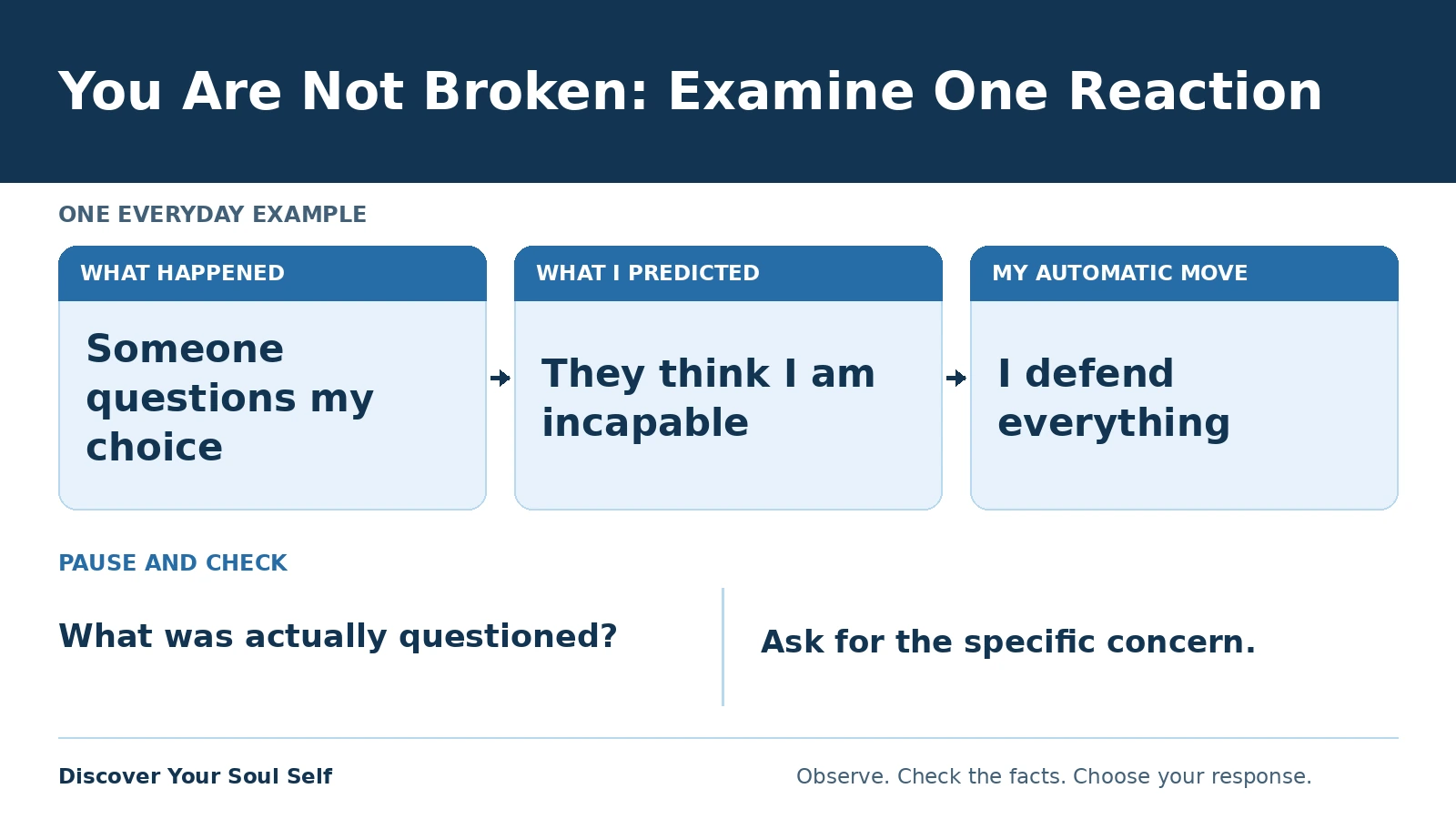
Someone questions your decision. You become tense, hear criticism in the question and begin defending yourself.
In my teaching model:
Event → Body State → Field Signal → Meaning → Emotion → Behaviour
Field signal describes the overall state you notice in yourself and bring into the interaction. This is a reflection framework, rather than a diagnosis or a clinical measurement.
You can notice the question, the tension, the meaning “They think I am incapable,” the fear and the urge to explain. That gives you several places to pause instead of treating the explanation as your whole personality.
Compassion still leaves room for responsibility
Understanding a reaction does not make every action harmless. If you insulted someone, broke an agreement or acted unfairly, you can repair it.
You can do that without deciding you are defective. A specific action needs a specific response, not a permanent sentence about your character.
Likewise, you do not have to blame your own programming for another person’s mistreatment. Check both sides of the situation.
Choose one response to practise
If you usually defend immediately, try asking, “What part are you concerned about?” If you automatically agree, ask for time to check. If you withdraw, consider naming that you need a pause.
Choose a manageable situation where the alternative is reasonably safe. Notice what you predicted and what actually happened.
The self-reflection tools can help you examine one example without turning the exercise into an assessment of your whole life.
Get support when you need it
If reactions repeatedly disrupt daily life or feel overwhelming, appropriate professional support can help. Physical symptoms also deserve suitable assessment rather than being explained away as programming.
You do not have to choose between self-understanding and outside help.
You can take a reaction seriously without making it proof that something is fundamentally wrong with who you are.
For a guided first practice, try the Deprogramming 101 sample lesson. It uses an everyday automatic yes to help you notice a learned rule without judging yourself for the response.

Written by
Mitz
I spent years analysing computer systems. Now I help people recognise the learned rules, predictions and automatic reactions shaping everyday life, so they can build awareness and self-trust.
More about Mitz →