Most people have no idea how programmed they are.
Not because they are stupid.
Because the most effective programming does not look like programming in the first place.
It feels like common sense.
It feels like maturity.
It feels like being realistic.
It feels like being a good person.
It feels like:
“This is just how life works.”
That is what makes programming so powerful.
By the time you are living from it, you do not experience it as something you learned.
You experience it as you.
That is why deprogramming matters.
Not because you are broken.
Not because everything about you is wrong.
But because some of the things you call personality, maturity, loyalty, responsibility, goodness, or common sense may actually be old conditioning running in the background.
In this video from my free course, Deprogramming 101, I explain how society, family, media, institutions, belonging, and emotional pressure all work together to shape what you believe, how you behave, and what you think is possible.
Why Programming Feels Like Common Sense
The hardest programming to see is the programming that feels normal.
You do not usually wake up and think:
“I am following a rule that was installed into me by family, school, work, media, culture, and the need to belong.”
You are more likely to think:
“This is just who I am.”
“I am just being responsible.”
“I am just being realistic.”
“I am just doing what good people do.”
“I am just keeping the peace.”
“I am just trying not to be difficult.”
“I am just doing what has to be done.”
And sometimes that may be true.
But sometimes, what you are calling common sense is actually a rule your system learned to obey.
A rule that was repeated enough, rewarded enough, and emotionally reinforced enough that it no longer feels external.
It feels like identity.
This is why I often say that programming is not an insult. It is how human systems learn. Your body, mind, emotions, and nervous system adapt to the environment you are in. If a behaviour keeps you safe, accepted, approved of, or connected, your system remembers it.
If you want to understand this foundation more deeply, read Why Being Programmed Is Not an Insult.
The Full Programming Chain
Most people separate things that are actually connected.
They think family is one thing.
School is another thing.
Media is another thing.
Work is another thing.
Belonging is another thing.
But they are not separate.
They work together.
One part sets the rule.
One part repeats the rule.
One part rewards the rule.
One part punishes you for breaking the rule.
One part makes non-compliance expensive.
One part makes fitting in feel emotionally safer.
And by the end of it, the rule does not feel like something outside of you anymore.
It feels like you.
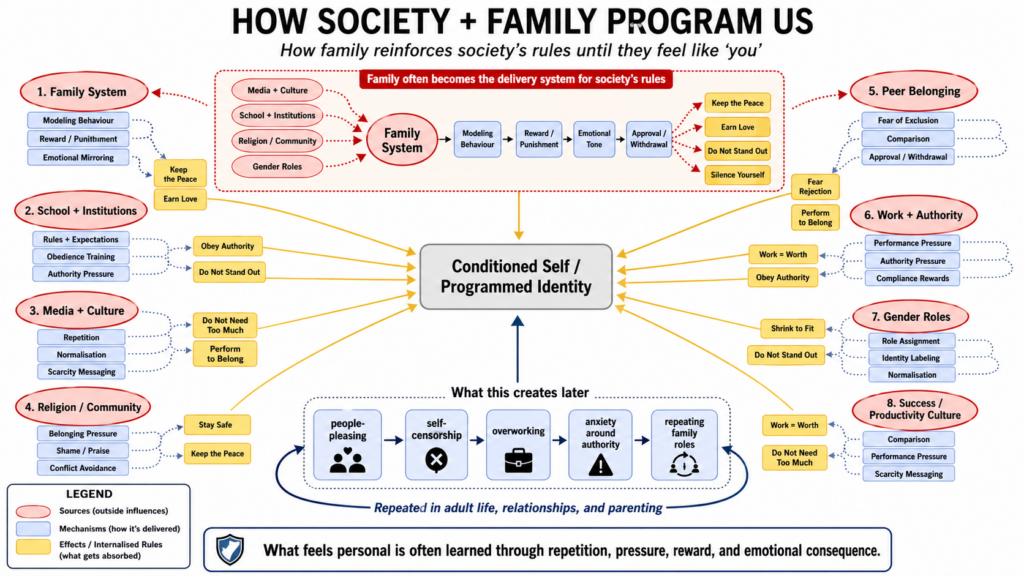
The chain looks like this:
Systems and culture create the rules.
Media and messaging repeat the rules.
Institutions organise behaviour around the rules.
Economic pressure makes resisting the rules expensive.
Social rewards make conforming to the rules desirable.
Family reinforces the rules emotionally.
You internalise the rules as identity.
Identity becomes filters.
Filters shape emotions.
Emotions drive behaviour.
Behaviour creates a reality that seems to prove the rule was true.
That is how adaptation becomes identity.
That is how programming disappears inside the person.
Systems and Culture Set the Frame
Systems and culture decide what is considered normal.
They shape what is acceptable, respectable, desirable, successful, mature, and safe.
They also shape what gets labelled as too much, not enough, selfish, lazy, unrealistic, irresponsible, rebellious, dramatic, difficult, or wrong.
This is where the first layer of programming goes in.
Culture gives you the rule.
It teaches you what kind of person fits.
It tells you what matters.
It tells you what success should look like.
It tells you what kind of behaviour gets approval.
It tells you what kind of behaviour gets judged.
And most people absorb these rules long before they question them.
They do not even realise they are being trained to measure themselves through a social frame.
This is why deprogramming requires awareness.
Because you cannot question a rule you still think is reality.
Media and Messaging Repeat the Rule
Once culture sets the rule, media and messaging keep repeating it.
Over and over again.
Through images.
Stories.
Headlines.
Movies.
Advertising.
Social media.
Trends.
Influencers.
Fear-based messaging.
Success stories.
Comparison.
Status signals.
This is how a social value becomes the air you breathe.
You see the same message so many times that eventually it stops looking like a message.
It starts looking obvious.
Normal.
Expected.
True.
If the message says your worth is tied to productivity, you may start feeling guilty when you rest.
If the message says success must look a certain way, you may start doubting your own path.
If the message says beauty, money, status, or performance equals value, you may start measuring yourself through those filters.
If the message says being easy to manage makes you good, you may start shrinking your truth to avoid being seen as difficult.
This is how messaging becomes programming.
It does not always force you.
It repeats itself until you begin to repeat it internally.
Institutions Turn Ideas Into Behaviour
After culture sets the rule and media repeats the rule, institutions begin organising behaviour around the rule.
School teaches you how to sit inside the rule.
Work teaches you how to perform inside the rule.
Religion can moralise the rule.
Government can regulate around the rule.
These structures take social ideas and turn them into lived behaviour.
You learn when to speak.
When to stay quiet.
How to behave.
What gets rewarded.
What gets punished.
What gets called success.
What gets called failure.
What kind of person is considered acceptable.
This does not mean every institution is bad.
It means institutions are part of how rules become behaviour.
They shape what people practise.
And what you practise long enough can start to feel like who you are.
If you want to understand how these behaviours become repeated patterns, read Understanding Your Behaviour Patterns.
Economic Pressure Makes Resistance Expensive
This is a big part of programming that many people miss.
A person might disagree with the system.
They might see the pattern.
They might feel that something is wrong.
But if questioning it costs too much, they adapt.
This is what pressure does.
It makes survival feel more urgent than truth.
The system does not always need to convince you fully.
It only needs to make non-compliance harder.
You may stay in work that drains you because leaving feels financially unsafe.
You may perform a version of yourself because your income depends on approval.
You may silence your truth because conflict could cost you stability.
You may follow the expected path because stepping outside of it feels too risky.
That is not weakness.
That is pressure.
And when pressure is repeated long enough, adaptation starts to look like choice.
This is why deprogramming is not just about mindset.
You cannot simply think your way out of patterns that were reinforced through survival pressure, emotional cost, and social consequence.
Social Rewards Make Conformity Desirable
Programming does not only work through punishment.
It also works through reward.
Approval.
Belonging.
Acceptance.
Status.
Praise.
Safety.
Being liked.
Being included.
Being seen as good.
Being seen as normal.
This is where people stop just obeying the rule and start wanting the reward that comes with it.
They want to be accepted.
They want to be chosen.
They want to be approved of.
They want to belong.
And that is human.
The need for belonging is not wrong.
But it becomes a problem when belonging requires self-abandonment.
This is where going against the system starts to feel emotionally expensive.
Because now it is not just:
“I disagree.”
Now it becomes:
“I might be left out.”
“I might be judged.”
“I might lose approval.”
“I might lose status.”
“I might look difficult.”
“I might be misunderstood.”
“I might be seen as selfish, unsafe, unrealistic, or wrong.”
Many people do not conform because they fully believe the message.
They conform because going against it can make them feel alone.
This is one reason emotional triggers can be so powerful. They do not just activate thoughts. They activate old fears of disconnection, judgment, shame, and rejection. If you want to understand this more, read How to Deal with Emotional Triggers.
Family Locks the Rule Into Your Nervous System
This is where programming becomes deeply personal.
Society may teach the rule conceptually.
But family teaches the cost somatically.
That means your body learns what happens when you break the rule.
If society says, “Do not stand out,” family may teach you what it feels like when you do.
If society says, “Be manageable,” family may teach you the tension that comes when you are not.
If society rewards obedience, family may make disobedience emotionally costly.
Family repeats the message.
Family expects conformity.
Family teaches roles.
Family punishes or shames deviation.
Family may withhold love, approval, safety, or connection when you step outside the expected version of yourself.
This is the double lock.
Outside the home, you may receive approval for fitting in.
Inside the home, you may experience tension, shame, withdrawal, conflict, punishment, or rejection when you step out.
That is how the rule hardens.
It is no longer just logical.
It becomes emotional.
It becomes nervous system memory.
It becomes:
“If I do this, I lose connection.”
“If I speak, there is tension.”
“If I say no, love gets withdrawn.”
“If I stand out, I am unsafe.”
“If I disappoint people, I am bad.”
“If I stop being useful, I may not matter.”
This is how family programming becomes identity.
And this is why some patterns do not loosen just because you become an adult.
The environment may have changed, but the body still remembers the cost.
If this connects with your relationship patterns, read How the Way Others Treat You Reveals Your Hidden Traumas and Patterns.
Repeated Rules Become Identity
Once a rule is repeated enough, rewarded enough, and emotionally reinforced enough, you internalise it.
That is where the system disappears inside of you.
It no longer sounds like:
“I was trained this way.”
It sounds like:
“This is just who I am.”
“I am just the responsible one.”
“I am just the strong one.”
“I am just the helper.”
“I am just not someone who asks for much.”
“I am just bad at conflict.”
“I am just a people-pleaser.”
“I am just anxious.”
“I am just realistic.”
“I am just not meant for more.”
But underneath those identity statements, there may be an adaptation.
Something your system learned because it worked.
It reduced tension.
It kept you connected.
It avoided punishment.
It earned approval.
It made you useful.
It made you safer.
This is why identity can be difficult to question.
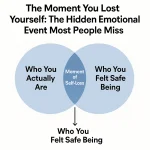
Because when programming becomes identity, questioning the pattern can feel like questioning yourself.
But you are not the program.
You are the one who can begin to see it.
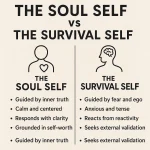
This connects deeply with The Soul Self vs The Survival Self, because not every part of you that feels familiar is your truest self. Some parts are survival patterns that became familiar through repetition.
Identity Becomes Filters
Once programming becomes identity, it becomes a filter.
A filter decides what you notice, what you ignore, and what things mean.
Two people can experience the same situation and read it completely differently because they are filtering reality through different internal rules.
If your filter says, “I am being judged,” you may notice every tone, pause, facial expression, or delay as evidence.
If your filter says, “I am not safe when people are upset,” conflict may feel dangerous even when it is not.
If your filter says, “I have to be useful to be loved,” you may feel guilty resting, receiving, or needing support.
If your filter says, “People leave when I need too much,” you may hide your needs before anyone even rejects them.
This is where old programming shapes the present.
The rule is not sitting in the past.
It is actively shaping how you read what is happening now.
This is why people can keep creating the same emotional reality again and again.
Not because life is only one way.
But because their filters keep organising reality around the old rule.
Filters Shape Emotions
Once the filter gives something meaning, emotion follows.
If the filter says, “This is dangerous,” you may feel fear.
If the filter says, “I am being judged,” you may feel shame.
If the filter says, “I might lose connection,” you may feel anxiety.
If the filter says, “I am being controlled,” you may feel anger.
If the filter says, “I do not matter,” you may feel sadness or collapse.
This is why emotions are not random.
They often follow meaning.
Something happens.
Your body reacts.
Your filter gives it meaning.
Then the emotion rises.
That does not mean the emotion is fake.
It means the emotion may be responding to the meaning your system attached to the moment.
This is why naming emotions matters.
If you cannot name the emotion, you often skip straight into the behaviour.
You explain.
You shut down.
You over-give.
You attack.
You chase.
You withdraw.
You keep the peace.
You abandon yourself.
If this is something you want to practise, read Naming Your Emotions.
Emotions Drive Behaviour
After the emotion rises, behaviour usually follows.
Fear may make you avoid.
Shame may make you hide.
Anxiety may make you over-explain.
Guilt may make you say yes.
Anger may make you defend.
Collapse may make you freeze.
Fear of rejection may make you perform.
Fear of conflict may make you stay quiet.
This is where the pattern becomes visible.
You stay useful.
You keep the peace.
You soften your truth.
You explain too much.
You say yes too quickly.
You make yourself easier to be around.
You do not ask for what you need.
You become the version of yourself that once kept connection safer.
And then life starts reflecting that behaviour back to you.
People expect you to keep being the helper.
They expect you to be available.
They expect you not to make a fuss.
They expect you to carry more than your share.
They expect the role because the role has been practised.
That does not mean they are not responsible for their behaviour.
It means your old adaptation can become part of a repeated dynamic.
This is why pattern work matters.
If you keep only looking at the final behaviour, you miss the chain underneath.
The behaviour is evidence.
The pattern is deeper.
Behaviour Creates Reality
This is the part that can be uncomfortable, but it is important.
Your repeated behaviours help create the reality you keep living inside.
If you never speak your needs, people may assume you do not have any.
If you always say yes, people may keep asking.
If you over-function, others may under-function around you.
If you keep chasing, you may stay in dynamics where you are never fully met.
If you keep hiding your truth, relationships may form around a version of you that is not fully real.
Then the reality seems to prove the old rule.
You think:
“See, people always take from me.”
“See, I have to do everything myself.”
“See, no one listens.”
“See, I cannot say no.”
“See, this is just how life works.”
But what you are calling reality may actually be reinforced conditioning.
This does not mean you caused everything.
It means the pattern may be participating in what keeps repeating.
That is why the chain matters.
Systems and culture create the rule.
Media repeats the rule.
Institutions structure the rule.
Economic pressure makes resisting expensive.
Social rewards make conformity desirable.
Family reinforces the rule emotionally.
You internalise the rule as identity.
Identity becomes filters.
Filters shape emotions.
Emotions drive behaviour.
Behaviour creates reality.
Reality seems to prove the rule was true.
That is the loop.
And once you can see the loop, you can begin to interrupt it.
If you want to go deeper into this idea, read The Patterns That Run You.
Why the System Does Not Need to Control Everyone Directly
The system does not need to control everyone directly.
It only needs enough people to fear being left out.
Because once belonging becomes tied to obedience, people begin managing themselves.
They silence themselves.
They edit themselves.
They perform.
They comply.
They call it maturity.
They call it being realistic.
They call it being good.
They call it keeping the peace.
They call it doing what has to be done.
And sometimes, yes, life does require maturity, responsibility, and consideration.
But there is a difference between conscious responsibility and programmed self-abandonment.
One comes from truth.
The other comes from fear.
That is what deprogramming helps you see.
Not so you can reject everything.
Not so you can become difficult for the sake of it.
Not so you can blame your family, society, or the world forever.
But so you can finally ask:
“Is this actually true for me?”
“Is this my choice, or my conditioning?”
“Am I acting from truth, or from the fear of losing approval?”
“Is this my real self, or the version of me that learned how to survive?”
What Deprogramming Actually Means
Deprogramming does not mean becoming empty.
It does not mean rejecting all values, structure, responsibility, or belonging.
It means learning to see what is running you.
It means noticing the rule before you obey it.
It means questioning the identity that formed around old pressure.
It means recognising when a filter is shaping the way you read reality.
It means catching the emotion before it becomes the old behaviour.
It means choosing from truth instead of trigger.
That is the work.
Not fixing yourself.
Not becoming someone else.
Not fighting the whole world.
But learning how your inner system works so you can stop living from programming you never consciously chose.
If this is new to you, You’re Not Stuck, You’re Repeating What Once Worked is a good next step.
Watch the Full Video
This video is taken from my free course, Deprogramming 101, where I teach the foundations of how old programs form, how they become identity, how filters shape what you see, and why behaviour does not change until you understand the pattern underneath it.
Want to Understand Your Own Programming?
If this helped you see how family, society, emotion, identity, and behaviour all connect, the next step is learning how these patterns run inside you.
Inside my free course, Deprogramming 101, I walk you through the foundations of programming, filters, emotional reactions, old roles, self-trust, and the automatic patterns that keep repeating in the background.
It is not about blaming yourself.
It is about learning how you run, so you can stop repeating the same pattern on autopilot.
In the free course you get access to all of these resources below:
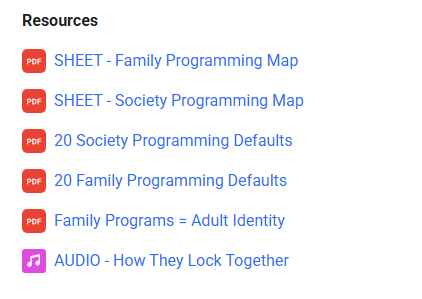
Here is a sample of a resource from the course:
Want to understand what’s running underneath?
If this made you realise your reactions may not be random, the next step is learning how the pattern works before it takes over.
Inside my free course, Deprogramming 101, I walk you through the programs, filters, old rules, body signals, and automatic reactions that keep old patterns alive.
Join the free course
Mitz Pantic is a pattern analyst, educator, and writer who explores how learned responses, body states, emotional meaning, and behaviour shape the way we experience ourselves and the world around us.
Drawing on years of analysing complex systems, she translates layered ideas about human programming into clear, practical frameworks that help people understand why they react, repeat patterns, and make certain choices, even when they consciously want something different.
Her work focuses on making the hidden processes beneath behaviour easier to see, so people can build greater awareness, self-trust, and the ability to respond from who they are now rather than from what they learned in the past.